
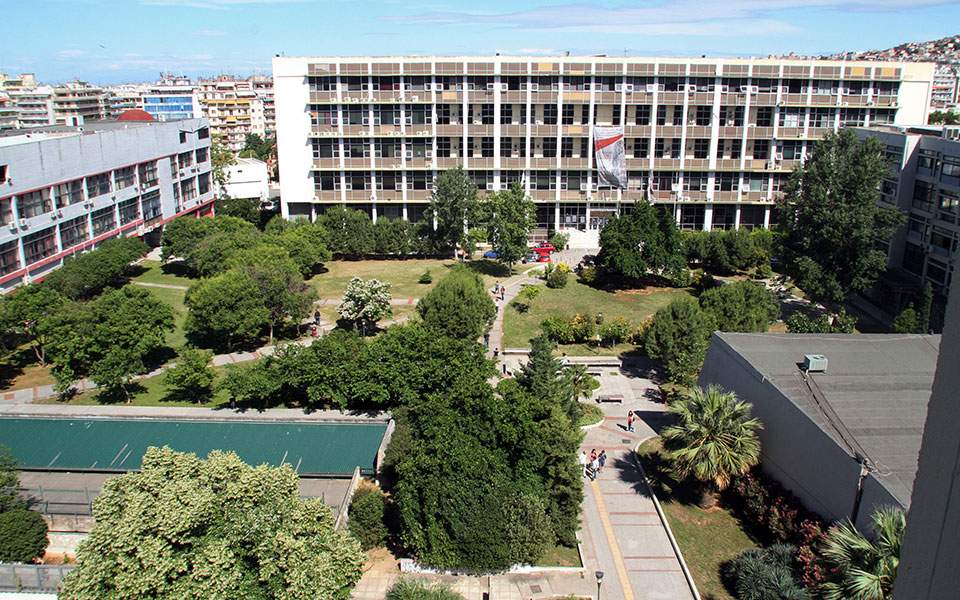
Eleftherios Venizelos was the first politician to start efforts to found a university in Thessaloniki at a time when Northern Greece had just been liberated and when reinforcing the “New Territories,” as the newly liberated areas were then called, emerged as a national need. Plans provided also for founding a university in Smyrna. However, the Asia Minor disaster thwarted these plans.
It was due to the initiative taken by the government of Alexandros Papanastasiou that the Aristotle University of Thessaloniki was founded in 1925. After considerable discussion, the founding act of the Aristotle University of Thessaloniki (no. 3341/14-6-25) was signed on June 5th, 1925 by the constitutional assembly of the time, and was published in the Government Gazette on June 22nd, 1925.
Problems continued to exist, however, after the enactment of the act, because of the political upheaval of the time. Thus, the Aristotle University first opened its doors a year later, in 1926. Georgios Chatzidakis was the first Head of the university and the second one was Christos Tsountas.
In order to meet the needs and demands of the time, special emphasis was placed on the development of the humanities. Thus, the Faculty of Philosophy was the first to open its doors in 1926. At first, it was housed in the “Allatini” building, which now hosts the Prefecture of Thessaloniki services. Soon, however, the location proved to be problematic and, in October 1927, the Faculty of Philosophy was transferred to a mansion in Ethnikis Amynis street, which previously housed the 2nd Military Hospital. The building was repaired and a third floor was added a little later. Today, it is the historic building of the university and houses part of the Faculty of Philosophy.
The Faculty of Physics and Mathematics opened its doors in 1927. Much later, one of its schools, the School of Forestry, along with the School of Agriculture became part of the newly created Faculty of Agriculture and Forestry which opened its doors in 1937. The Faculty of Law and Economics opened its doors in 1928, whereas the Faculty of Medicine and the Faculty of Theology were founded later, in 1941. The School of Veterinary Medicine was founded in 1950, the Institute of Foreign Languages in 1951, the Faculty of Engineering in 1955, and the School of Dentistry in 1959 as part of the Faculty of Medicine (it acquired its present status as an independent School in 1971).
In 1982, Law no. 1268 providing for the structure and operation of Greek Higher Educational Institutes brought about a complete restructuring of the Aristotle University of Thessaloniki, since it promoted the school as the basic academic unit, a restructuring of faculties and the organization of schools into new faculties: the Faculty of Theology, the Faculty of Philosophy, the Faculty of Sciences, the Faculty of Law and Economics, the Faculty of Geotechnical Sciences, the Faculty of Health Sciences, and the Faculty of Engineering.
The Faculty of Education was founded in 1983, the Faculty of Fine Arts in 1984, the independent school of Physical Education and Sports Sciences in 1983 and the independent School of Journalism and Mass Media in 1991. The School of Education in Florina was founded in 1993 and is now part of the University of Western Macedonia. New schools were added in the already existing faculties, such as the School of Political Sciences in the Faculty of Law, Economics and Political Sciences, the School of Psychology in the Faculty of Philosophy, and the School of Informatics in the Faculty of Sciences. Among the newer schools are the following independent schools: the School of Energy Resources Management Engineering in Kozani (1999), the School of Balkan Studies (1999) and the School of Education (1993) in Florina, which are part of the University of Western Macedonia as of January 1st, 2004 (Senate meeting 2753/28-8-2003). Two new schools were founded in 2004: the School of Film Studies, part of the Faculty of Fine Arts, and the School of Urban-Regional Planning and Development Engineering (in Veroia), part of the Faculty of Engineering. It needs to be noted that the Senate has decided to abolish the Faculty of Health Sciences and the Faculty of Geotechnical Sciences, and organize their schools into single-school faculties. Only the School of Pharmacy has retained its status as an independent school.
Vision and Mission of Aristotle University of Thessaloniki
Based on the mission of Higher Education Institutions (HEIs), as described by Greek Law (N. 4009/2011, article 4) the vision and mission of AUTh can be summarized as follows:
· Upgrading the educational process and the curricula (Accreditation) – Educational and teaching excellence
· Enhancing excellence in research
· Enhancing AUTh’s international presence
· Upgrading the organization and operation of Administrative Services
· Using, applying and making the most of current Information and Communication Technologies
· Upgrading the quality of student services
· Connecting the University with society and promoting of AUTh to a landmark of development and culture
· Utilizing the University’s real property and intangible assets for the benefit of both AUTh and society at large
· Being an environmentally friendly University
· Being a friendly and accessible University towards all citizens and especially the ones with disabilities.
Strategic objectives of Aristotle University of Thessaloniki
The strategic objectives of The Aristotle University of Thessaloniki, in the framework of its vision and mission, remain high and consistently oriented to the continuation of its tradition, namely to be a pioneer institution, standing out among Greek and many foreign Universities on all levels: education, research, culture, connection with society.
More specifically, The Aristotle University of Thessaloniki aims at the following:
· To continue being the best multi thematic university in Southeastern Europe and attract the best candidates (on postgraduate level first and later on undergraduate level), from Russia, America, all the countries of SE Europe, from the Middle and Far East and also from the Greek diaspora around the globe.
· To address the need for all its Faculties and Schools to achieve high international recognition and to reach high positions in International University Rankings.
· To achieve this international recognition through both the high quality and academically recognized research activity of its members, as well as through
· The integration of its graduates into the labour market
· The quality of undergraduate studies
· The utilization of research results by society and enterprises
· To have an efficient and user-friendly ICT application environment, providing services and support to students, staff and researchers.
· To constantly improve the working conditions and the quality of life in the Institution.
· To make the knowledge produced and transmitted easily accessible to society and enterprises.
· To inform society, the state and the international academic community of any work that is conducted in AUTh (at the academic, research, developmental, social or cultural level).
· To stay in contact with its alumni and make them feel proud for having studied at a university that excels and engages the best among them in activities for the promotion and support of the University, but also for synergies in areas of education, research and innovation.
· To be able to attract top academics from the Greek diaspora.
· To be a leading and attractive partner in international research and development projects.
In the framework of the Action “Upgrading the Administrative Services at AUTh” the Institution focuses on the certain measures that will be successful through the implementation of the following actions.
1. Continuous quality improvement in education and research
2. Constant improvement in the quality of processes and provided services
3. Constant improvement in the quality of life and quality of work within Aristotle University
4. Transparency at all levels
5. Dissemination of Aristotle University achievements to the society and the government, as well as to the international academic community.
Quality Policies
Cornerstones of quality policies:
· Development of a target setting system (Administration through targets) and monitoring of the quality indicators, measuring the effectiveness and efficiency of administrative services (on all administration levels). Upgrading of the Quality Assurance System into a decision-making support system.
· Design, modeling and application of the new electronic services required.
· Educational and supportive actions.
· Design of the reorganization of Administratiion and optimization of the relevant procedures.
· Implementation of the reorganization of Administration and optimization of the relevant procedures.
· Archive digitization.
Structure of Aristotle University of Thessaloniki
The Aristotle University of Thessaloniki is constructed on the base of science area faculties, with each of them comprising a certain number of schools. There are the following faculties: Faculty of Education, Faculty of Theology, Faculty of Philosophy, Faculty of Sciences, Faculty of Law, Faculty of Physical Education and Sport Sciences, Faculty of Economics and Political Sciences, Faculty of Agriculture Forestry and Natural Environment, Faculty of Health Sciences, Faculty of Engineering, Faculty of Fine Arts.
The Faculty of Health Sciences (FHS) of Aristotle University of Thessaloniki (AUTH)
The Faculty of Health Sciences (FHS) of Aristotle University of Thessaloniki (AUTH) was established on 05.06.2013, as part of (1) the “ATHENA” reform act of Higher Educational Institutions, (2) the proposal of the Senate of AUTH (Reg. meeting 2856/6-3-2013) and (3) the Presidential Decree 98/2013 (Government Gazette 134/5-6 to 2013, vol. A’). The FHS encompasses the Schools of Medicine, Veterinary Medicine, Dentistry and Pharmacy.
Objectives of the Faculty
With the implementation of innovative curricula, the FHS provides an education that integrates formal “classroom” knowledge with clinical experience and thereby prepares students for all career options in medicine, veterinary medicine, dentistry and pharmacy.
In specific:
· It provides integrated education in medicine, veterinary medicine, dentistry and pharmacy, at the undergraduate, postgraduate, and professional training levels.
· It promotes basic, applied, and translational research in the fields of health promotion, disease prevention diagnosis and treatment.
· It fosters international collaborations in research and education.
· In addition to its academic and research missions, the FHS medical also provides highly skilled clinical care services to the community of Thessaloniki and Northern Greece.
· Finally, it is the objective of the FHS to act as a consultant on matters of health and health policy to Health Services and the State.
Dental Medicine in Aristotle University of Thessaloniki
Dental School through years
Dental School of Thessaloniki has already completed half a century of life and looks ahead with optimism for the years to come. It was founded on September 1959 and in December of the same year welcomed the first 52 students that succeeded in exams whose number increased to 70 due to transfers.
In the 50’s, the Aristotle University grows strongly and many newly established departments and faculties are founded. Specifically, in 1950 is founded the Veterinary School and follow in 1951 to 1954 Institutes of English and French Language and in 1955 to 1958 the Polytechnic School initially with the Department of Civil Engineering and then with the Department of Architecture.
The recognized dental science started in Greece in 1834 with the introduction of the Royal Medical Congress of Greece, which was the first legislation that safeguarded Public Health. And concerned physicians, dentists, pharmacists and midwives.
In 1893 the first private Karakatsanis Dental School was founded, which also was recognized immediately by the Medical Congress of Greece.
In 1911 the Law concerning “The Organization of the University of Athens” Dental School is created as an annex to the Medical School, which targets to educate doctors. The school is attached to the Medical School. Attendance is three years and teaching is assigned to permanent and temporary teachers of the Medical School and a temporary professor of Dentistry and Oral Pathology is added with a special clinic.
In 1916, after the decree concerning”The operation of the Dental School, National University” began also the operation of the Dental School of Athens in the building located at the George road in Kannigos Square.
In 1921 and 1922, according to a LD, dental education increases to four years and the Dental School becomes independent with its own Teacher Association in which a Professor of Medicine is Head, four new dentals departments are added, apart from Stomatology and so there are, now, five dental laboratories. Therefore, members of the Association of Teachers are all teachers of medical courses and five (5) teachers of dental courses.
The Dental School of Aristotle University of Thessaloniki was established in 1959. Nowadays, it is part of the University Campus and the main entrance is located on Agiou Dimitriou Street, one of the main roads of Thessaloniki. The Dental School consists of 2 buildings, the main building, which houses the Laboratories and the Clinics for the clinical practice of undergraduate students and the Mandalidio Research Center (second building), which houses research laboratories and the clinics of the postgraduate program of Dentistry. The Dental School of Thessaloniki is part of the Health Sciences School that is part of the Aristotle University of Thessaloniki one of the major universities of Greece.
The Dental School is divided into Sections. Each Section coordinates the teaching of a specific field of dental science.
Each Section has its General Assembly and the Director. The General Assembly consists of the Faculty’s Teaching and Research Staff (TRS) of the Division, 2 to 5 representatives of undergraduate students (as long as their number does not exceed 30% of the total number of faculty), a representative of the postgraduate students of the sector and a representative of the Laboratory Teaching Staff (EDIP), the Special Technical Laboratory Staff (ETEP) and Assistant-Scientific Staff.
The Director is the chairman of the General Assembly of the Section and is elected by the General Assembly, belongs to one of the two senior faculty ranks and his/her term shall last for one year.
The Dental School is divided into 4 Sections and there are 9 departments:
· Section of Pathology and Therapeutics of Dental Tissues
· Section of Oral- Maxillofacial Pathology, Surgery and Radiology
· Section of Orthodontics, Paediatric Dentistry, Preventive Dentistry and Periodontology
· Section of Prosthodontics
· Department of Orthodontics
· Department of Prosthodontics
· Department of Pediatric Dentistry
· Department of Preventive Dentistry, Periodontology and implant Biology
· Department of Dentoalveolar Surgery, Implantology and Oral Radiology
· Department of Oral Medicine / Pathology
· Department of Oral and Maxillofacial Surgery
· Department of Endodontology
· Department of Basic Dental Sciences
The Dental School of Aristotle University of Thessaloniki offers as undergraduate as postgraduate programmes of education. The Dental Curriculum of the Dental School is a full time program and in accordance with the European Union regulations and the position paper of ADEE( Association for Dental Education in Europe) on the Profile and Competences of the European Dentist The teaching language is Greek in the undergraduate dental program. Students study dental terminology in several foreign languages such as English, German, French.
The Dental School in Aristotle University offers postgraduate programs in English language
About 800 undergraduate students pass a 5 years training period leading to a Degree of dentistry. The programme is based on international standards to offer both knowledge and practical/clinical training. Each academic year is structured by semesters, as presented in the Study Guide.
The first academic years the study program starts with basic medical and dental courses (most of them are in common with the Faculty of Medicine program) and continues with specialization courses in the following years.
Dental students provide patients treatment for the first time during the 3rd academic year (5th semester starting with Oral Diagnosis, Periodontology, Oral Anesthesiology.
The use of computers is achieved in the disciplines of medical informatics, biostatistics, where students are trained in statistical analysis in medical science and the most commonly used computer programs.
Several courses deal with new developments in medical, biological, physics, chemical fields.
CAD-CAM techniques in Dentistry, Laser techniques in all dental fields (operative dentistry, endodontology, periodontology, surgery), CBCT scan are some courses included in both theoretical and clinical training of dental undergraduate and postgraduate students. A fully equipped histopathology laboratory incorporated in the Dept of Oral Medicine & Oral Pathology enables the dental students to understand the oral mucosal diseases including periodontal disease in the microscopical level.
A comprehensive dental care clinic works in the 5th wear providing to our students the necessary knowledge and experience, by applying the clinical algorithms that have been taught for the management of patients with specific complex dental problems.
For their pre-clinical training our students are trained on phantom dental simulators that are equipped with dental clinical microscopes.
Patient records are maintained in a computer based system with multiple capabilities (x-ray-image storage and retrieval etc.). The patient’s medical and dental history is easily retrieved enabling our students to study a very large number of clinical case series, that help them to acquire information about the sequence of the dental management.
Clinical training includes a large number of cases in all dental disciplines that our students work simultaneously as an interventionist and assistant to become even more familiar with patient contact and management.
The teaching is based on several methods and technologies.
The groups include a small number of students in order to maintain a high level of transmission of knowledge. The courses are based on PowerPoint presentations that may include videos to offer a more effective understanding of the subjects taught. A large series of videos are available in the taught courses to present clinical techniques to prepare the students before their entrance in the clinics. A combination of active/proactive and self-directing learning is followed. Several lectures and clinical case presentations are available through e-platforms (such as e-learning auth.gr) Clinical algorithms are presented and discussed with students to train them in the management of patients with specific complex dental problems. The virtual patient definitely will be part of the future methods of performing initial clinical familiarization before the entrance of our students in the main clinical training.
The Dental School offers a wide range of postgraduate programs in several dental specialties in Greek Language
1. Science & Technology of Prosthetic Dentistry
2. Applied & Clinical Dental Science
3. Restorative Dentistry- Esthetic Conservative Restorations
4. Dental & Craniofacial Bioengineering & Biomaterials
5. Orthodontics
6. Oral Medicine & Oral Pathology
7. Dento-Alveolar Surgery
8. Special Care dentistry
9. Paediatric Dentistry
10. Periodontology
11. Dental prosthetics
12. Basic Dental Sciences
13. Endodontics
Furthermore, the Dental School of Aristotle University offers postgraduate programs in English Language in:
· Orthodontics
· Dental & Craniofacial Bioengineering & Biomaterials
· Paediatric Dentistry
The postgraduate programs lead to Master’s Degree and the duration is depending on the chosen specialization and last between 3 to 6 semesters. The evaluation in the postgraduate level is continuous based in examinations (written & oral), assessment of the clinical cases performed by the postgraduate students, essays and a final dissertation which is a personal research project.
After the completion of their Master’s degree the postgraduate students have the opportunity to proceed to the PhD academic degree in several different dental fields.
The minimum duration for a PhD is 3 years and the PhD candidate must perform a personal unique research project. The PhD candidate is instructed by a 3 members committee and with the completion the research project is presented in a 7 member committee. A basic prerequisite before the presentation of the project is to publish the results in two at least publications in high impact scientific journals.
It also offers two courses of postgraduate studies. The first course includes postgraduate studies in different sections of dentistry for 2 or 3 years, leading to a postgraduate diploma of Mater of Science (MSci). The second course includes 3 year studies, leading to a PhD Diploma.
Soft Skills Teaching and Learning
In the medical and dental curricula are incorporated disciplines such as Behavioral Sciences, Medical Psychology, Medical Communication, Scientific Research
Methodology, Bioethics and Deontology, Patient’s Psychologic Management, starting in early semesters. The above mentioned disciplines are conducted during the preclinical training so that students become familiar with communication and patient management prior their entrance in the clinics.