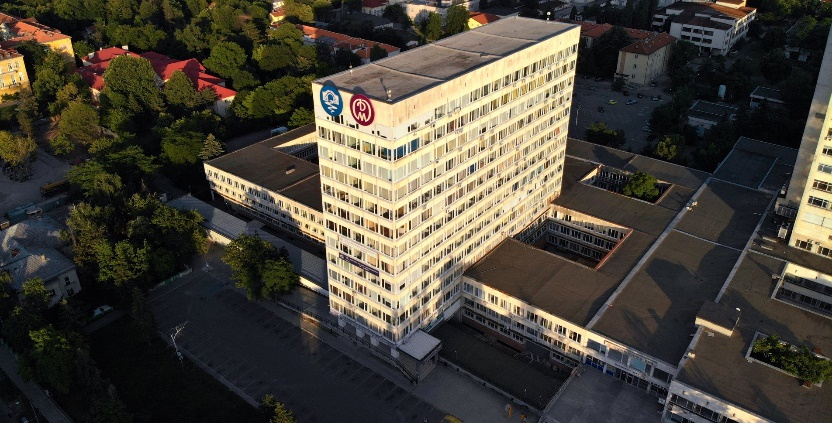
Medical University, Sofia, Bulgaria

History of Medical University Sofia

The Law establishing the Medical Faculty of Sofia University was passed by the 17th National Assembly on November 10th 1917.

By decree №21 of His Majesty, King Ferdinand entered into farce and is recorded in government’s White Paper on November 22nd 1917.

The draft was submitted by the Minister of Education Peter Peshev. In his address, he says: “Undoubtly, one of the important governmental tasks we have to accomplish is the opening of the Faculty of medicine at our university…. This is the first of all for our national pride and, more importantly, for the sense of the dignity of our country, on thr path of a better future. This is also the result of the necessity to lay the foundations of Bulgarian science in the field of medicine.”

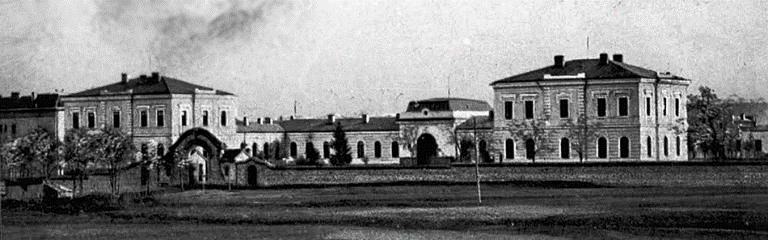
Hospital “Knyaz Alexander I” XIX cent.

The first lecture at the Faculty of medicine was held in April, 1918. The offocoal opening was attended by the Minister of Education and members of the Supreme medical council. Professor G.Shishkov read the first lecture on zoology, and the second one – by Al.Hristov – professor of physics.

There were 12 departments in Faculty of Medicine but the amendment to the Law of Higher Education adopted in 1946 raised their number to 31.

In 1950, according to Decree No 246 of the Presidium of National Assembly, a Medical Academy was established. Thus the Medical Faculty became an independent institution of the the Sofia university. Professor M.Markov was appointed as its manager. In the same year, the institute for the Professional Development and Specialization of Physicians was established.

In 1954 the Medical Academy was renamed to the Higher Medical Institute.

For many years after Bulgarian liberation, pharmacists have graduated leading foreign universities. After 1880, by the Supreme Medical Council regulation there was training only for assistant pharmacists. In 1942 at the suggestion of professor Alexiev the Pharmacy Department at the Sofia University Faculty of Physics and Mathematics was established. Since 1951 it became a department at Medical Academy of Sofia with first Dean Professor D.Dalev.

Mission of the Medical University – Sofia

Medical University – Sofia trains in the spirit of professionalism, tolerance, teamwork skills, responsibility, autonomy, problems solving and decision making skills. This is the way that MUS tries to face increasing public needs.

Goals of the MUS mission are:

  • To achieve and improve MUS recognition as internationally recognized research center

  • To ensure high quality education and research

  • To ensure that graduated medical specialists as employees or employers meet the demands of healthcare systems

  • To optimize resources used for work conditions and services improvement

Structure of Medical University, Sofia

There are four faculties and two collages in Medical University Sofia:

  • Faculty of Medicine

  • Faculty of Dental Medicine

  • Faculty of Pharmacy

  • Medical University-Sofia Subsidiary in city of Vratza

  • Medical College of Sofia

Faculty of Dental Medicine

In the early nineteenth century there was a rise in the social and cultural life of the Bulgarians, including in medicine and healthcare. In 1837 in Shumen the first Turkish military hospital, a medical institution of modern type, was established. In 1865 civil hospitals were opened in Ruse and Pleven, in 1868 –in Varna, Shumen, Belogradchik, Vidin and Kula, Sliven and Plovdiv. In 1869 the Catholic hospital in Plovdiv, which was founded by a Croatian Catholic order, was opened and was the most advanced for that time. The first Bulgarian doctors who graduated in Western Europe, Russia, Turkey and Romania came and started practicing in their home towns. Among them were Atanas Bogoridy, Nicholas Pikolo, Petar Beron, Stoyan Chomakov, George Mirkovic, Ivan Bogorov, George Vulkovich, Christo Stambolski, Stojko Yordanov, Georgi Sarafov and others. The books they wrote set the basis for Bulgarian Renaissance medical literature and there the authors devoted particular attention to dentistry. Until the Liberation dental care in Bulgaria was provided by the barbers, healers and doctors. However, according to some sources, there were cities where foreign dentists worked – such as Ruse (1865) – Dr. S.Landau from Vienna, Dr. Robin – 1869, Angelo Gastaldi – 1873, Dr. G.Zhyusti – 1874, Dr. Zh.G.Pop, a dentist of the Imperial court in Vienna (1875). After the Liberation of Bulgaria from Ottoman yoke beneficial conditions for the development of the state were created. In the Principality of Bulgaria and Eastern Rumelia two documents, governing the organization and management of health services were created and published (the country was divided by the Treaty of Berlin until 6 September 1885). Those documents were the legal basis of the medical and dental profession in the “two Bulgarias.” They were: “Temporary rules for medical service management in Bulgaria” and “Public administrative health rules № 30” for Eastern Rumelia. In the very next year (1880) the Sanitary Board of Eastern Rumelia issued License № 1 to Vasil Argazov who had graduated the Bucharest dental school – “… to put into practice the dental art in Eastern Rumelia.” That was the first licensed dentist, whose descendants up to the fourth generation, were also committed to the dental profession. After the Liberation some foreign dentists came to Bulgaria, among them Friedrich Flamich (1878), Ignatius Mushler (1880), Siegfried Hoff (1887), Wilar (1885), Voltaire Viller and others. Each of them contributed to the development of dentistry in Bulgaria. Fr. Flamih chaired the Constituent Assembly of the First Bulgarian Odontology Society in 1905. I.Mushler was considered the founder of oral hygiene and preventive dentistry, Siegfried Hoff was the first dentist who spared time at certain days for free dental treatment and tooth extractions for poor people. Voltaire Viller created a tooth powder “КINOL” which “keeps teeth clean and prevents gums from suppuration.” According to the General Directorate of Statistics in the Principality of Bulgaria, in 1893 there were 14 foreign dentists who practiced in the following cities: Vidin – 2; Plovdiv – 3; Pleven – 1; Ruse – 2; Sofia – 4; Tarnovo – 1 and Harmanli -1. In 1903 the practicing dentists were 27: 16 Bulgarians, 5 Greeks, 3 Armenians, 1 American, 1 Polish and 1 Czech. The first Bulgarian dentists had graduated mainly in Russia. They were both doctors and dentists. Usually they worked in a public service establishment as physicians and had a private dental practice. Dr. Themistocle Paraskevov who had graduated in medicine in Athens and specialized dentistry in Paris (1890) was the first certified Bulgarian physician-dentist. Dr.MichaelElmazov (1859-1928)
The increased dentists number and the need for protecting their professional interests required the establishment of an organization that united the dentists and helped decision making on urgent matters of the dental society. In 1905 in a small hall of Cultural Center “Slavjanska beseda” in Sofia the First Congress of the First Odontology Association was held. Dr. M.Elmazov was elected president, Dr. D.Toshkov – secretary and 9 dentists – members. At the 4th Congress (1910) the Bulgarian Odontology Association was renamed Bulgarian Dental Association. After the 5th Congress in 1911 the publishing of the journal “Dental Review” was started. It dealt with scientific, practical and organizational problems of the dental society. The journal was published under this name till 1950, and then, till 2001 – under the name of “Stomatology”. In 2001 it was again renamed “Dental Review” and since 2007 it has been published under the name of “Dental Medicine”. This journal is a serious scientific magazine that has played and plays a major role in the development of dentistry in Bulgaria. Bulgarian Dental Association is a developing organization that has contributed to: 1. the creation of the School of dentistry in Bulgaria; 2. establishing a public dental service (The first dental office was opened in the Sofia School for Boys); 3. the financial support of dentists by the Dental Cooperative, established in 1919, to help them to acquire office equipment and materials supply; 4. the regulation of the profession by defining the relationships with physicians, dental technicians, barbers and others. With the Public Health Act of 1929 the many titles – dentist, tooth doctor, doctor, and surgeon, were limited to only two: dentist and dental doctor. Only those who had a university degree were called ‘doctors’. As by the Ministerial Decree enacted in 1932 the phisicians who wanted to practice dentistry had to pass a two-year training course, technicians were qualified as craftsmen without the right to work directly with the patients, and barbers were definitely prohibited from any medical practice.

The Bulgarian Dental Association existed until 1949. That year the professional associations of doctors, dentists and pharmacists were integrated in the Trade Union of Health Workers. In 1991 the Bulgarian Stomatological Association was established.

The discussion “for” and “against” opening a higher dental school in Bulgaria took more than 30 years. The idea of opening a School of dentistry was promoted by members of the Bulgarian Dental Association. Opponents of this idea stated that a university would be costly for the state, would create an excess of dental professionals, and there were no well-trained teachers. The unsuccessful wars that Bulgaria led in this period – in 1913, 1919 and the subsequent economic and political crises, also delayed decision making on this issue. On 24 June 1942 at the 4-th Session of the Ordinary National Assembly Decree № 32 for the creation of two departments at the Medical Faculty – in medicine and in dentistry, was adopted. The Department of Dentistry was structured in three sections: Operative Dentistry and Orthodontics, Prosthetic dentistry and Conservative dentistry. Three German alumni were elected heads of the sections – Associate Professors Slavtcho Davidov (graduated in Leipzig), George Stiliyanov (Halle) and Dimitar Svrakov (Freiburg). The same year the first academic course started and the number of students was 79. At the beginning, especially during the war evacuation (1943- 1944), the newly created school faced the need of trained teachers, premises and equipment, materials and instruments. Elected heads of sections recruited as assistant professors dentists who had graduated abroad. They developed their carrier as lecturers and academic teachers, becoming professors and heads of departments. These were Prof. Boyan Boyanov, Prof. Zhecho Koev, Prof. Michail Balabanov, Prof. Dinko Stranski, Prof. Todor Burkov and others. At that time the government decided, young people who had taken part in the Second World War could study without entrance examinations. That led to unexpected results: in 1944 the number of first year students was 941 and in 1945 – 1139 (“cursus magnum”). The high interest in studying dentistry was a sign of the high social prestige of the profession. In 1950 the Dental Department was renamed Stomatological in order to emphasize the improved medical training of students, and in 1951 it was reorganized as a separate Faculty of Stomatology at the Medical Academy.

Today the Faculty of Dental Medicine is a state, autonomous and accredited institution of higher education with distinct mission and goals, devoted to training dental medicine specialists. It is part of the Medical University of Sofia and is the oldest state educational institution for Master’s degree in dental medicine, postgraduate specialization, and a doctoral degree in accredited dental specialties.

With protocol No 11 issued on 09.04.2015, the Accreditation Council of NEAA gives program accreditation to the specialty ”Dental Medicine” of the regulated professions for the educational-qualification degree “Master” at the Faculty of Dental Medicine of MU-Sofia, based on a general evaluation, according to criteria 9.56. The accreditation period is 6 (six) years, following Art. 79, article 4, item 1 of the Law for Higher Education.

The Faculty of Dental Medicine provides training both in Bulgarian and English language for international students. The curricula, the organization of education and the control on acquired knowledge and skills are in line with the EU Directives and preserve the heritage and experience of the faculty in the field of dental education.

The Faculty educational facilities include pre-clinical and clinical rooms, auditoria, classrooms, seminar rooms, a specialized library, an information center, an administrative and economic department, etc.

The training in general medicine is performed in the premises of the Medical University – Sofia – an established center for pre-clinical and clinical education, as well as research development in all medical specialties.

The major objective of the Faculty Management Board is to continuously improve and modernize all areas of its activity – management, education, research, staff, and facilities.

  • Тhe Faculty of Dental Medicine is called upon to preserve and develop academic and professional autonomy, to encourage the development of professional knowledge and dental science, to grant decent professional realization of its graduates. To teach them humanity and responsibility, as well as a consistent interest towards further improvement.”

  • The Faculty’s mission is:

  • To educate dental specialists with a contemporary vision, high professionalism, and moral, with a responsible and human attitude towards oral health of patients of all ages;

  • To create highly qualified teaching staff, to develop education according to current international standards through the implementation of all achievements of the world dental science and to research up-to-date scientific problems;

  • To integrate into the modern European and world education system, providing free movement of workers and students;

  • Maintain academicism and professionalism.

The main goal of the faculty is to create professionals – Doctors of Dental Medicine, Masters, specialists, and P.h.D students, who are able to successfully apply the acquired knowledge and skills in the social environment to protect, restore and strengthen the dental health of the population, i.e.the faculty’s mission is directed to the public needs and expectations.

By its mission and main goal, the Faculty of Dental Medicine – Sofia has the following specific objectives and tasks for the qualitative preparation of the graduating Doctors of Dental Medicine:

1. To have an understanding of the basic, biological, behavioral and medical sciences that construct the contemporary concepts of oral healthcare and its preservation;

2. To practice dental medicine in its entirety – comprehensive care for the patient without harming them or the environment;

3. To understand the ethical and moral responsibilities of dental medicine, both for the individual patient and society as a whole;

4. To treat according to the community’s treatment needs for reduction of oral diseases;

5. To know the etiology and principles of biological processes at the molecular level, the pathogenesis, demographic characteristics, prevention and treatment of diseases in the oral cavity;

6. To be familiar with the pharmacology of related to dental medicine drugs and to understand their use in common diseases and their oral manifestations. To be able to prescribe the proper medication for the treatment of dental diseases;

7. To know biomaterial sciences as required by the dental practice;

8. To practice within the ethical and medical-legal requirements of the professional association;

9. To control cross infections and prevent chemical, physical and biological contamination;

10. To apply the full scope of modern practices for pain and fear management in patients when working at the dental office;

11. To acknowledge the importance of continuing professional education and qualification for making adequate progress in all areas of oral medicine;

12. To actively promote health, with particular responsibilities towards the maintenance of oral health;

13. Upon graduation, to be able to objectively evaluate the quality of their work;

14. To be able to analyze up-to-date scientific literature and implement research findings in the treatment of patients.

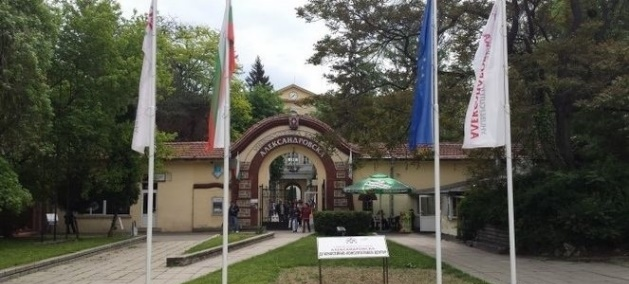
Structure of the Faculty of Dentistry

There are 8 departments established at the Faculty of Dental Medicine:

At the Faculty of Dental Medicine at the Medical University of Sofia, students are taught dental medicine to graduate as “Master of Dental Medicine”.

This education provides knowledge and skills required for proper prevention, diagnostics, and treatment of oral diseases. Theoretical preparation is acquired through compulsory, elective and facultative courses via lectures, seminars, exercises, and self-training. Practical skills are obtained through practical exercises during semester training, schooling practices, and pre-graduate internship. Students’ practical training involves a certain amount of therapeutic activities.

The education of students in dental medicine is organized in three stages:

First Stage

During the first two years, students receive medico-biological training.

Second Stage

The clinical and medical training is received from the second to the tenth semester and includes education in general medical and specialized dental disciplines.

Third Stage

The pre-graduate internship includes a 1-hour daily practice in Pediatric Dental Medicine, Conservative Dentistry, Oral and Maxillofacial Surgery, Prosthetic Dental Medicine, Periodontology and Orthodontics, and ends with state examinations.

State Examinations

Students who pass them successfully are awarded Doctor’s qualification in Dental Medicine and a Master’s degree. From 2005/2006 a credit system was introduced for the implementation of Ordinance №21 / 30.09.2004. The Faculty’s management encourages students to take part in research activity. Credits are also awarded for student participation in scientific and research projects, congresses and conferences, as well as for publications in Bulgarian and foreign journals. The duration of dental education is 6 years. It takes ten semesters of 15 weeks each, divided into two semesters per year. After the second, fourth, sixth and eighth-semester students must complete a 30-day summer internship. The tenth semester is followed by pre-graduate internship – 6 months (1014 hours). The educational process for obtaining a Master’s Degree in Dental Medicine ends with 6 state exams in the major dental disciplines – conservative dentistry, prosthetic dental medicine, dental, oral and maxillofacial surgery, pediatric dental medicine, orthodontics, and periodontology.

Elective Courses

From the first till the fifth year, students are required to collect 9,6 credits from elective courses, as well as participation in scientific research projects, congresses and conferences, and publications in Bulgarian and foreign journals.

At the Faculty of Dental Medicine, Sofia, students can choose from the following elective courses:

  • Physiotherapy – Department of Conservative Dentistry

  • Dental Implantology – Department of Prosthetic Dental Medicine

  • Dental Allergology – Department of Imaging and Oral Diagnostics

  • Oral Medicine – Department of Imaging and Oral Diagnostics

Students in dental medicine can also attend elective courses from the Medical Faculty.

II. Completion of state internship

Successfully defended before a committee result of the complex approach in the treatment of a patient.

III. State exams

The grade is based on the performance during the state exam.
Components of the assessment:

1. Test in each of the disciplines.

– test evaluation criteria:

  • up to 59% – Weak
  • 60% to 69% – Medium
  • 70% to 79% – Good
  • 80% to 89% – Very good
  • over 90% – Excellent.

2. Written question(s), clinical case(s), etc., depending on the specifics of training.

3. Final grade – average of the grades of the individual components.

With a poor result of one of the components, the exam is repeated during the following sessions.

Postgraduate Education in Faculty of Dental Medicine, Sofia

Specialty Attainment at the Faculty of Dental Medicine, MU-Sofia

The requirements and procedure for specialty attainment in the healthcare system and its financing are regulated by Ordinance No.1 of 22.01.2015 at the Ministry of Health, ref. DV. Issue 7 of January 27, 2015, amend. and ext. DV. 83 of 27 October 2015, Suppl. DV. Issue 88 of November 8, 2016, amend. and ext. DV. Issue 58 of 23 July 2019.

Specialties

Nomenclature of specialties in the healthcare system for physicians with professional qualification “Doctor of Dental Medicine” is described in annex No.1 to Ordinance No.1 of 22.01.2015 of the Ministry of Health. At FDM – MU Sofia theoretical and practical training is conducted in the following specialties:

  • Oral surgery – 3 years;

  • Dental, oral and maxillofacial surgery – 4 years;

  • Maxillofacial surgery (for persons with professional qualifications ” Doctor”) – 5 years;

  • Prosthetic Dental Medicine – 3 years;

  • Dental implantology – 3 years;

  • Orthodontics – 3 years;

  • Operative dentistry and endodontics – 3 years;

  • Periodontics and oral diseases – 3 years;

  • Pediatric dental medicine – 3 years;

  • Social medicine and public dental health – 3 years;

  • Dental Clinical Allergology – 3 years;

  • Dental imaging – 3 years;

  • General dental medicine – 3 years.

Specialty attainment requires theoretical and practical training in the relevant discipline and ends with a state exam (practical and theoretical) before a state examination committee. The training for a specialty and the state exam is conducted in Bulgarian. In addition to the theoretical and practical training, the Faculty of Dental Medicine conducts theoretical courses only for residents admitted for practical training in accredited faculty bases, who have a contract with the Medical University – Sofia. Surgical practical training is divided into modules and sections, some of which are not held at the Faculty of Dental Medicine and take place at another hospital – training base. The terms and conditions for conducting this training shall be specified in a contract between the specialist training base and the host hospital or institution of higher education. The host hospital or institution of higher education issues a Certificate of Attendance for each module or section of the course program.

Soft Skills Teaching and Learning

In curriculum there are items concerning soft skills incorporated in different disciplines, mainly Medical Psychology, Social Medicine and Medical Ethics, Dental Public Health.

The above mentioned disciplines are conducted during the preclinical and early clinical training so that students become familiar with communication and patient management prior their entrance in the clinics. Teaching is based on lecturers and seminars. Topics in the program concerning soft skills are “Developmental Psychology“, “Anxiety and stress in the dental practice“, “Dental phobia“, “Relationships in the dental practice: team; doctor-patient“, “Communication and Barriers to Effective Communication in Dental Medicine Communication in Dentistry – Verbal and Nonverbal Communication“, “Dentist-Patient Communication. Team-building training for improving communication skills in the dental office. There are some Medical Social Medicine and Medical Ethics discipline topics that are also associated to soft skills development: “Socio – medical approach in dental practice”, “Principles in Medical Ethics”.

In Paediatric Dental Medicine training there are two lectures facing soft skills

1. “Problems in children dental treatment” as the content includes: child’s development stages – physiological and cognitive. Anxiety, fear and phobia of dental treatment. Methods for their assessment.

2. “Non-pharmacological methods of influencing children’s behavior in the dental office” – and this includes – factors affecting the child’s cooperation in the dental office, parenting styles, the role of the dentist, managing the child’s behavior in the dental environment.